How can a city grieve and dream together?
How Can a City Grieve and Dream Together?
9/2026 Naomi Natale
Four years ago, I wrote an open letter to the world. I titled it: A Request for Beauty on Behalf of My Broken Heart.
It spoke of grief in all its forms. Of a mother’s heartache and greatest fears. Of a daughter’s sorrow and longing. Of the grief held in our bodies and our histories, in the land—this Earth, our mother. In all that has been lost.
I wrote it from the soul of an artist who has spent much of her life asking what it means to belong to one another, and what responsibility that belonging asks of us.
For over two decades, my artistic practice has been rooted in bringing people together, a practice that was raised by this community. So many of you have been my teachers. Anything I understand about making work in relationship with other people, I have learned through you.
Twenty years ago, through a work called The Cradle Project, I asked people to make empty cradles from discarded materials. Hundreds of people in Albuquerque, across New Mexico, and eventually far beyond gathered to make them by hand, with extraordinary love and care.
At the heart of that work was a longing:
If I never meet you in this life, let me feel a lack.
I wanted to understand what might happen if we allowed ourselves to feel the absence of someone we would never know. If we let that absence matter to us.
After cradles we made bones. One million of them. What began here in Albuquerque eventually became one million handmade bones laid across the National Mall as a visible petition against genocides and mass atrocities. That work was birthed here. Before there were a million bones, there were 50,000 laid through downtown Albuquerque, carried and placed by hundreds of people in this community.
Each bone asked us to remember that we belong to one another.
And beneath that, the question:
What is the responsibility of belonging?
Again and again, this community has helped me give form to absence and infinite loss. You have stood with me inside histories we could not change and asked what it might mean not to look away.
And then grief came all the way home.
My son Sebastián was two years old when he was diagnosed with an ultra-rare, incurable cancer that had already spread to his lungs. Suddenly, the questions I had spent years asking through my work were no longer questions I could approach from any distance.
For a decade, I had been consumed by one question:
How do we live with the grief of everything that does not go away?
In those years, I came to believe that nothing ever goes away. It just becomes something else.
Historical trauma. Ecological trauma. Ancestral trauma.
If none of it truly disappears, if it simply changes form, how do we live with its persistence?
How do we live with the grief of it all?
I did not have an answer. I never do.
Instead, I had a dream of a boat.
A vessel in the New Mexico desert.
About nine months into Sebastián’s diagnosis, at a time when most of our nights were spent in the hospital, away from my other son Santiago, I had a desire to immerse myself in the dreams of children. I wanted to sit and revel in the beauty and bravery of them. Though I dared not imagine what they could be, the simple thought of them existing in the world offered me hope and a window into something outside of my reality.
Something precious. Something worth fighting for.
I found myself obsessing over the relationship between grief and dreams, desperate to understand what our dreams might teach us about what we love, what we long for, and what keeps us moving forward.
I worried though, that for many of us our dreams are not easily accessible. That sometimes we need a bridge, a conceptual passage, an occasion, to bring ourselves to that place where vulnerability meets imagination and longing.
I believed that boat could take us there.
And I began imagining what it might mean to actually build it—a permanent vessel here in Albuquerque, a Site of Solace where people could come to grieve and dream.
This is the work I have come to call Of Grief & Dreams.
As part of this work, I began guiding people on Dream Journeys, inviting them into a vessel I created and asking them to imagine that it could take them anywhere, in any time, real or imagined.
When I finally took the journey myself, I closed my eyes. I found myself lying on its deck, a son nestled beneath each arm.
We didn’t go anywhere.
We sang songs under the sky and rested in each other’s bodies.
This was my most sacred dream.
And I was already living it.
Every night when I put my children to bed, I lie between them. Before the journey, I loved those minutes, but I rushed through them too. There was always work waiting for me once they fell asleep.
I don’t rush anymore. Two years later, I still lie there each night with my children beneath my arms. These are the holiest minutes of my day.
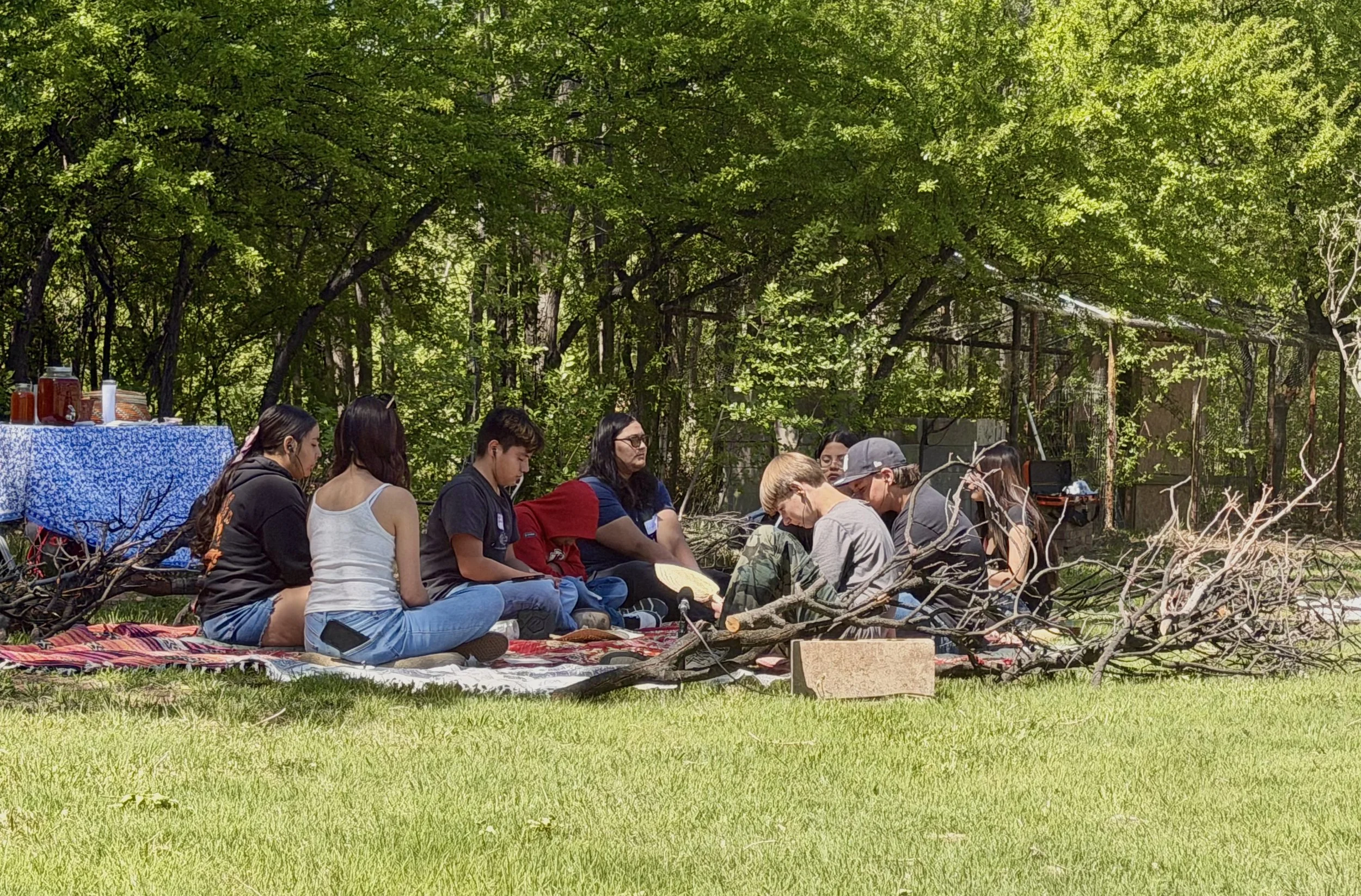
For years now, I have guided Dream Journeys with children and adults, in classrooms and community spaces, beside the Rio Grande and now in the middle of our city.
Over these years, I’ve come to notice that the dream often carries something within it.
A truth.
Not factual truth, but human truth.
The truth of what matters.
The truth of what hurts.
The truth of what we long for.
The truth of who we are.
Over and over, I have seen grief reveal itself through a dream or wish. I think about a four-year-old girl who told us her wish was to smell her dad. And then she told us her dad had just died.
The wish itself carried the grief of losing him. There wasn’t really a line between the two.
I think, too, about how many dreams are born from ecological and ancestral grief, where the dream itself exists because of what has been lost, harmed, or stolen.
Others enter the work through grief. They are drawn first to a space that names grief as something worthy of our attention and care. And there, they are invited to dream—to explore what the dream might reveal about how they live in relationship with their grief.
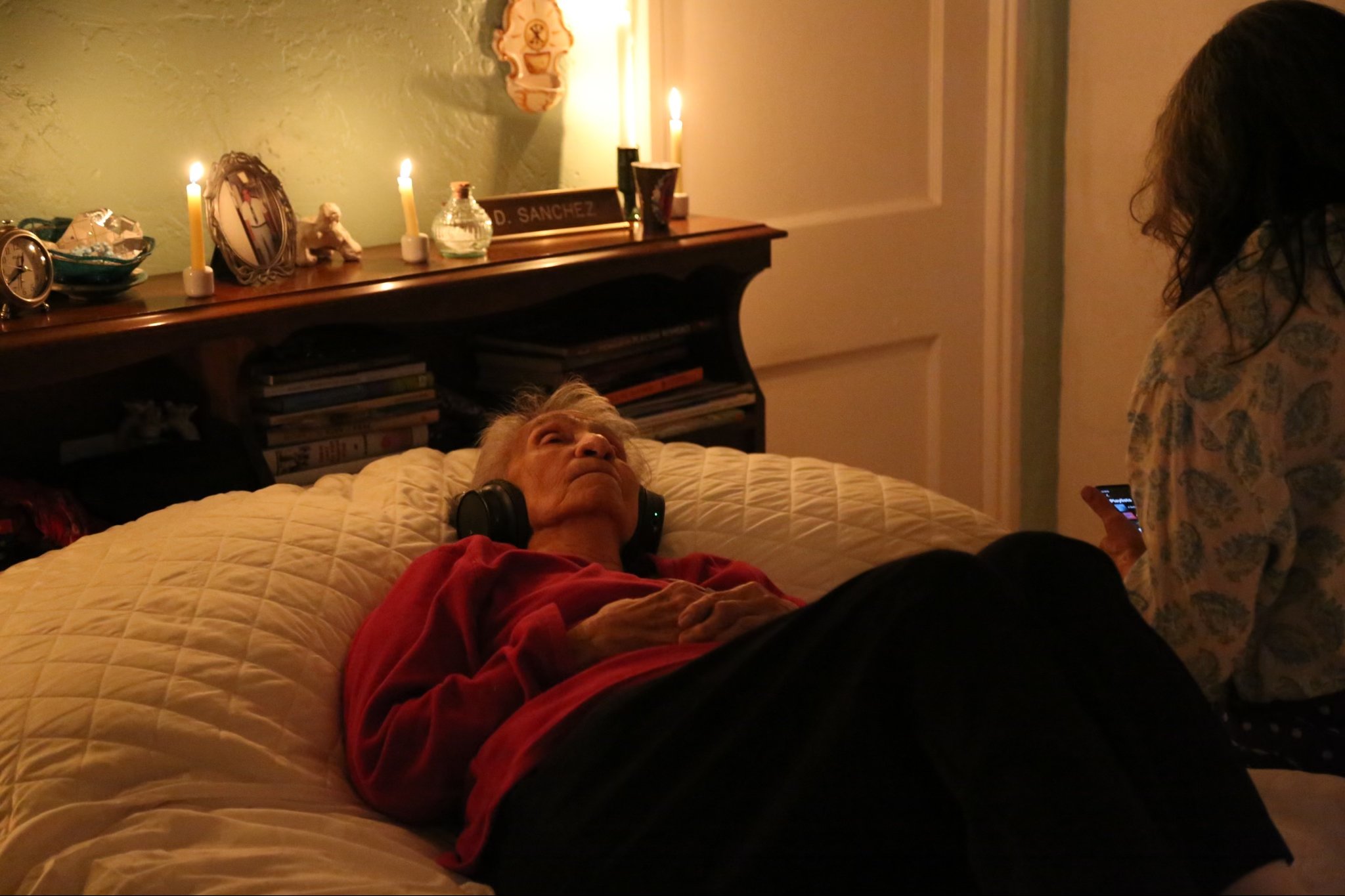
One of those journeys taught me something I have carried with me ever since. A 97-year-old woman journeyed through her life, seeing both the good and the bad. I worried afterward that the experience had brought her into a place of regret. I worried that perhaps I had invited her somewhere painful without knowing how to care for what she found there.
Later, she told me she wished she had done it forty years earlier.
When I asked if she wished she hadn’t gone there at all, she said:
“No. Because I’m still here. I still have time.”
She wasn’t asking for a more comfortable story. She was looking to reflect on a truer one. And I began to understand something I had only partially understand before:
Peace may not be possible until we know what it is we need to make peace with. And that isn’t always what we think it is.
I know something about the longing for a cure. My family has spent these same years desperately searching for one for Sebastián’s cancer.
I want the cancer gone. I want it never to return.
But there is so much in this life that cannot be cured.
There are losses that cannot be restored. Histories whose consequences continue through generations. Absences that enter the living world and change it forever.
What actually goes away?
Perhaps healing asks something different of us. Perhaps it asks us to discern what remains, and to find ways to live in relationship with it.
There is still so much I need to understand. And I have always known these are questions we must ask together.
Every Dream Journey begins with Mary Oliver’s Wild Geese.
“Tell me about despair, yours, and I will tell you mine.”
I return to that line again and again. This is how I believe we might hold one another. How we might think about what it means to belong.
Tell me what you love.
Tell me what you long for.
Tell me what you are afraid of losing.
Tell me what is already here that you most cherish.
And tell me what hurts.
Not because I can make it disappear. But because perhaps we can make room for yours and mine.
For more than twenty years, Albuquerque has entered these questions with me. And now I am asking you to enter another.
PASSAGE, currently at Gallery One inside Albuquerque City Hall, is an invitation to enter Of Grief & Dreams with me. It is an attempt to make physical some of what I have been learning through these years of dreaming with people: that perhaps our city needs places where what we carry can be made visible and given room. Places for reflection and imagination. Places where we can encounter what is true in ourselves and one another without being asked to fix it or turn away.
What we learn through PASSAGE will help shape Of Grief & Dreams as it continues to grow—both the permanent Site of Solace envisioned for the San Antonio Oxbow Open Space and the work that happens beyond it, in classrooms and homes, with organizations and communities, and in the places where we already gather.
Today, I am asking you to come. Take a Dream Journey. Spend time with what others have shared. And if you are willing, leave something of what you find—your voice, your reflections, your questions, your worries and wishes, your grief and dreams.
And then I hope you might invite me in.
If you are an educator, a community leader, a social worker, a healer—if you gather people, care for them, or feel the need for places where we can be with what we carry—I hope you will imagine with me where this work might go next.
Into a classroom. A community center. A barbershop. Around a kitchen table. The places where we come together.
I want to understand what might happen when we make room within the spaces where we already belong for grieving and dreaming.
I want and need to be in this conversation with as many of you as are willing to enter it.
What are the ways a city can grieve and dream together?
And is there room, in what that asks of us, to hold one another?
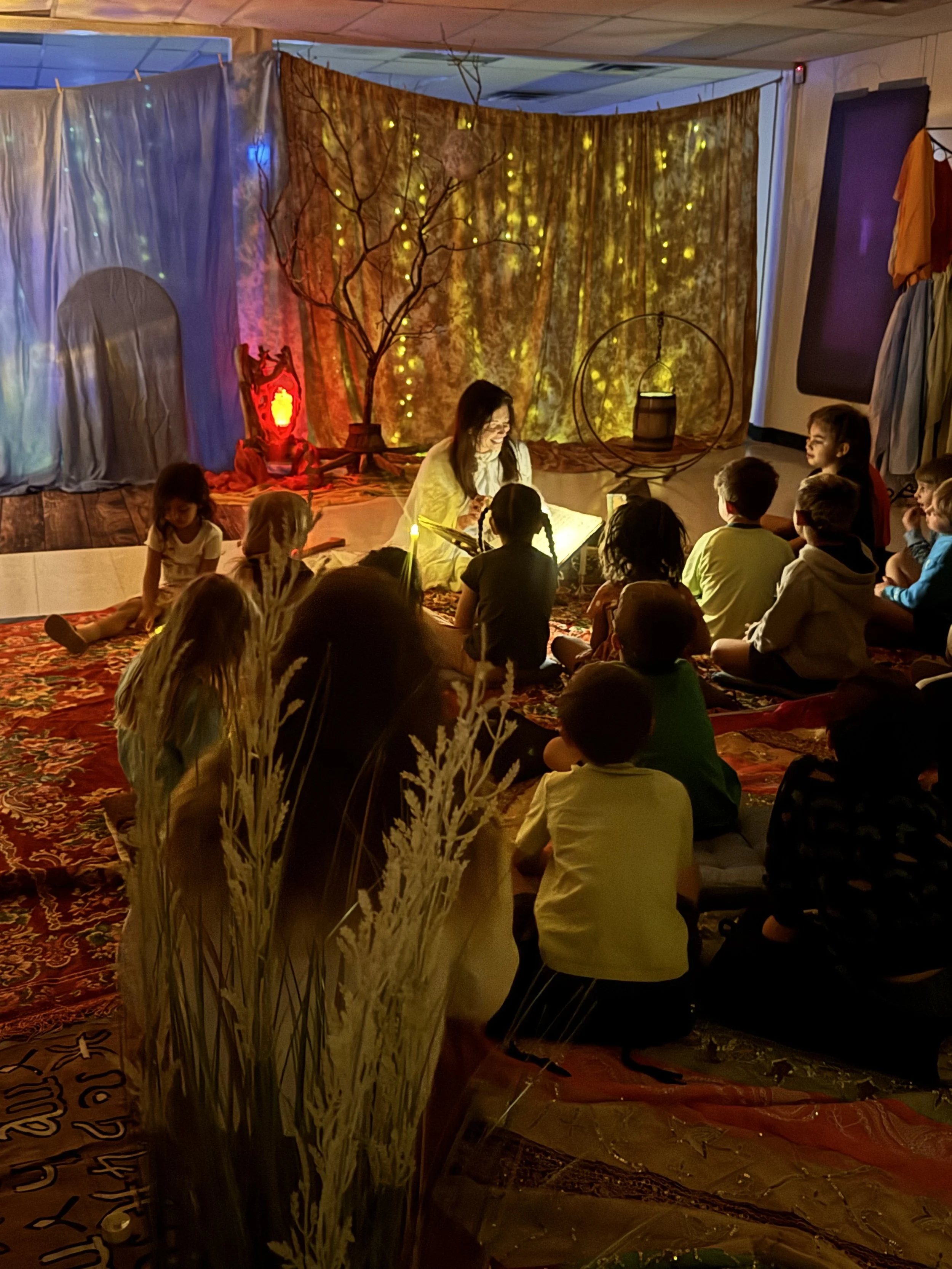
what some dreamers have shared…
"The experience of sitting down with my peers and discussing our individual dreams was most meaningful. Each of us had such a different idea of what a sacred dream was, and each dream was likewise very different. I really enjoyed getting to see those perspectives, as well as getting to learn a little more about the values of those around me.”
-anonymous student reflection
“I think the most valuable part of this experience was being able to take a deep breath and handle my emotions. Recently, I have been so anxious about what the future holds and how I am going to deal with it. I found that everyone is worried about this now, but also that we don’t have to be worried about it. We are all still very young and we are still evolving and making up our minds. We will be okay.”
– anonymous student reflection
“My dream is that one day I’ll be confident in where I belong. I won’t have to prove my worth to live. I will feel comfortable in my place as a child of this universe, a reflection of the stars.”
– student dream
“As I began to explore my own deep dreams, I realized I am not seeking anything I do not already have access to, and I found great power in that. What I dream of having, above all else, is peace–I believe as I have grown up, the thing I grieve most is the ease I used to move through life with in childhood. Oftentimes, I want to reconnect with my young self, and feel the weight of adulthood off my shoulders. This has taught me that in order to sustain my livelihood moving forward, I will need to put effort into protecting my own peace. That way I will not end up grieving my own loss of time.”
-anonymous student reflection